
Choosing the wrong category is one of the more common and more costly mistakes families make. Here is how the three actually differ.
Companionship
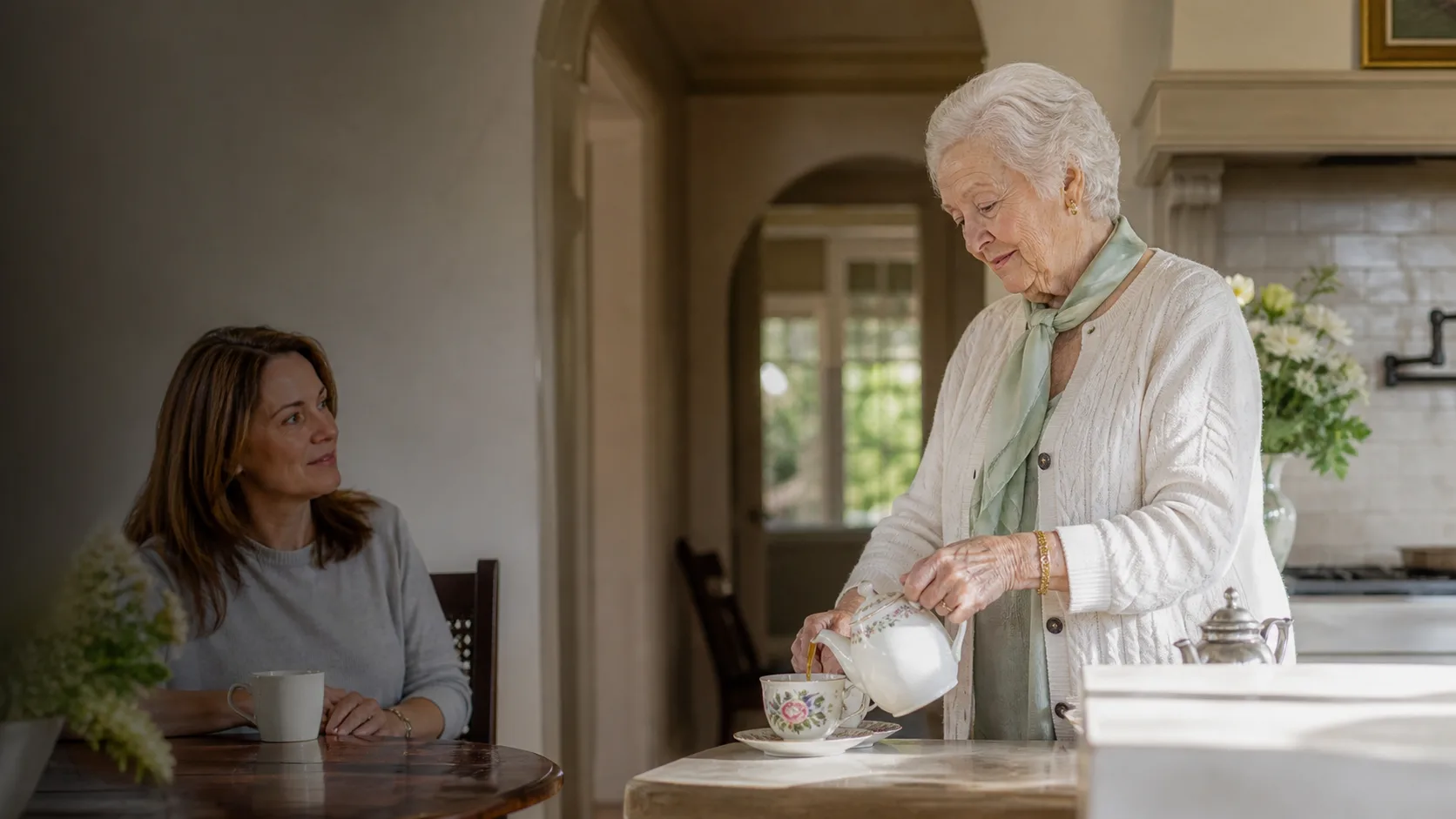
Non-medical companionship is built around relationship and participation. It can include conversation, shared activities, time outside, brain-stimulating games, technology help, errands done together, and support around routines and interests. It solves a social and lifestyle problem.
Caregiving or personal care
Caregiving and personal-care services can include hands-on help with daily living. The exact scope, training and regulatory requirements vary by provider and by state. If a person needs help with bathing, dressing, transfers, toileting, medication or close supervision, ask a properly qualified provider about the right level of service.
Home health or skilled care
Home health typically involves clinical care delivered under licensed professionals. Nursing, therapy, medication-related services and formal care plans. It is a medical service and it is not the same thing as companionship.
These can complement one another. A person may have entirely appropriate clinical or personal-care support in place and still want more companionship, activity and one-to-one connection. The two are not in competition.
One question that usually settles it
"Is the main need medical, hands-on, safety-related, or social?"
A medical or hands-on need deserves a qualified medical or personal-care answer, and no amount of good company substitutes for it. A social and lifestyle need is where companionship does its best work.
Where we sit
My Modern Companion is firmly in the first category, by design. We are non-medical, and we work alongside clinical and personal-care providers rather than in place of them. Read our service scope.